
Tuberculosis and the Role of Rapid Tests in Global Health
Tuberculosis (TB) is one of the world’s deadliest infectious diseases, caused by the bacterium Mycobacterium tuberculosis. Despite significant global efforts to control and treat the disease, TB remains a major public health issue, especially in low- and middle-income countries. According to the World Health Organization (WHO), In 2022 alone, an estimated 10.6 million people fell ill with TB, and 1.6 million died from the disease, making it the second leading infectious cause of death worldwide after COVID-19.
The global fight against TB is complicated by several factors, including delayed diagnosis, drug resistance, and co-infections with HIV. Rapid diagnostic tests are becoming increasingly critical tools in addressing these challenges by improving the speed, accuracy, and accessibility of TB diagnosis. These tests not only help to confirm TB infections quickly but also play a vital role in controlling the spread of the disease and ensuring timely treatment.
In this blog, we’ll explore the biology of tuberculosis, the current diagnostic methods, and the role of rapid tests in improving global health outcomes.

Understanding Tuberculosis: Biology and Transmission
Tuberculosis is primarily a disease of the lungs, though it can affect other parts of the body, including the brain, kidneys, and spine. The bacterium Mycobacterium tuberculosis is spread through the air when a person with active TB coughs, sneezes, or speaks, releasing bacteria-laden droplets. People nearby can inhale these droplets and become infected.
For more information on TB transmission, please refer to the Centers for Disease Control and Prevention (CDC) guidelines on tuberculosis .
Most people who are exposed to M. tuberculosis do not develop active TB. The immune system can usually control the infection, leading to a latent TB infection (LTBI), where the bacteria remain dormant in the body without causing symptoms. However, approximately 5-10% of people with latent TB will develop active TB disease, particularly if their immune system is weakened, such as in cases of HIV infection or malnutrition.
Symptoms of active TB include:
- Persistent cough (lasting three weeks or longer)
- Chest pain
- Coughing up blood or sputum
- Weight loss
- Fatigue
- Fever and night sweats
If left untreated, TB can be fatal. However, TB is a curable disease with the right treatment, usually involving a course of multiple antibiotics taken over six months or more. The challenge lies in diagnosing the disease early enough to prevent complications and transmission to others.
The Need for Rapid Diagnosis
One of the major barriers in controlling TB is the delay in diagnosis. Traditional diagnostic methods, such as sputum smear microscopy and culture, can be slow and may require specialized laboratory facilities that are not always available in resource-limited settings.
- Sputum smear microscopy, a common method in TB diagnosis, involves examining a patient’s sputum sample under a microscope for the presence of M. tuberculosis. While this test is inexpensive and widely used, it has limitations. It requires a skilled technician, has a low sensitivity (especially in people with HIV or children), and does not provide information on drug resistance.
- Culture tests, considered the gold standard for diagnosing TB, are more sensitive and can detect drug-resistant strains. However, they can take weeks to produce results, as M. tuberculosis is a slow-growing bacterium.
The delays in these traditional methods mean that patients may go undiagnosed and untreated for weeks or months, increasing the risk of transmission and worsening health outcomes.
This is where rapid diagnostic tests come into play. These tests provide results in a much shorter time frame, often within hours, and are particularly useful in settings where access to advanced laboratory facilities is limited.
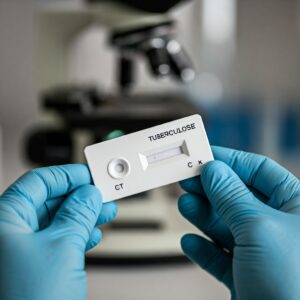
Rapid Diagnostic Tests for TB
Rapid diagnostic tests for TB have revolutionized the way the disease is detected, particularly in high-burden, low-resource areas. These tests allow healthcare providers to diagnose TB quickly and accurately, enabling faster treatment initiation and reducing the risk of further transmission. There are several types of rapid tests available for TB diagnosis, including molecular tests, antigen detection tests, and lateral flow assays.
For detailed descriptions of this test and its applications, studies available on NCBI provide in-depth technical evaluations .
Capilia TB Neo
The TB Neo test is one such rapid diagnostic test that has proven invaluable in the detection of Mycobacterium tuberculosis. The test is designed to detect the presence of TB antigens in sputum samples, offering a quick and reliable method for diagnosing active TB.
- How it works: The TB Neo test is based on a lateral flow immunoassay that detects lipoarabinomannan (LAM), a glycolipid antigen present on the surface of M. tuberculosis bacteria. The test involves applying a sputum sample to a test strip, which then reacts with specific antibodies to detect the presence of LAM. If LAM is present, a visible line appears on the test strip, indicating a positive result.
- Advantages: The TB Neo test provides results in as little as 15 minutes, making it an ideal tool for use in clinics and remote settings where laboratory facilities may not be available. The test is easy to use, requires minimal equipment, and does not require the technical expertise needed for microscopy or culture tests.
TB Neo Extraction Buffer
In addition to the test itself, the Capilia TB Neo Extraction Buffer is used to prepare sputum samples for testing. The buffer ensures that the sputum is properly processed to release the LAM antigens, improving the sensitivity and reliability of the test. Proper sample preparation is crucial for ensuring accurate results, especially in patients with low bacterial loads or co-infections that may interfere with antigen detection.
The Role of Rapid Tests in Tackling Drug-Resistant TB
One of the most pressing issues in the fight against TB is the rise of drug-resistant strains of M. tuberculosis. Multidrug-resistant TB (MDR-TB) and extensively drug-resistant TB (XDR-TB) are forms of TB that do not respond to the standard first-line drugs used to treat the disease. These drug-resistant forms of TB are much more difficult and expensive to treat, and they pose a significant threat to global health.
Rapid diagnostic tests are essential tools in identifying drug-resistant TB. Molecular tests such as the MTB/RIF assay can detect both M. tuberculosis and mutations associated with rifampicin resistance, one of the most important drugs in TB treatment. While tests like the Capilia TB Neo do not directly test for drug resistance, they play a crucial role in quickly identifying patients who need further testing and treatment.

The Impact of Rapid Tests on Global TB Control
The introduction of rapid diagnostic tests for TB has had a profound impact on global efforts to control the disease. These tests are particularly important in high-burden countries, where TB incidence is high and healthcare resources are limited. Some of the key benefits of rapid TB tests include:
- Faster Diagnosis: Rapid tests allow healthcare providers to diagnose TB within hours, compared to the days or weeks required for traditional methods. This allows patients to begin treatment sooner, improving outcomes and reducing transmission.
- Improved Access in Remote Areas: In many parts of the world, access to advanced laboratory facilities is limited. Rapid tests can be used in remote or resource-limited settings, making it easier to diagnose TB in populations that might otherwise go undiagnosed.
- Reduction in TB Transmission: Early diagnosis and treatment are key to preventing the spread of TB. By providing rapid results, these tests help healthcare providers identify and isolate infectious individuals before they can transmit the disease to others.
- Cost-Effective Solutions: Rapid tests are generally more cost-effective than traditional methods, particularly in resource-limited settings. The cost savings come not only from the tests themselves but also from the reduced need for long hospital stays or extensive laboratory testing.
- Facilitating Active Case Finding: In countries where TB is endemic, active case finding is crucial for controlling the disease. Rapid tests make it easier to screen high-risk populations, such as people living with HIV, healthcare workers, and household contacts of TB patients.
Challenges and Limitations
While rapid diagnostic tests have many advantages, there are also some limitations and challenges that must be addressed. For instance, the sensitivity of some rapid tests may be lower in patients with HIV or in those with extrapulmonary TB (TB that occurs outside of the lungs). Additionally, while rapid tests can confirm the presence of TB, they may not provide information on drug resistance, which is critical for ensuring that patients receive the appropriate treatment.
Ensuring access to rapid tests in low-income countries remains a significant challenge. Although these tests are cost-effective, the initial investment in equipment, training, and infrastructure can be a barrier for some countries.
Conclusion
Tuberculosis continues to be a major public health challenge, especially in regions with limited healthcare infrastructure. Rapid diagnostic tests, such as the Capilia TB Neo and Capilia TB Neo Extraction Buffer, have become essential tools in the global fight against TB, enabling faster diagnosis and more efficient treatment. By improving access to reliable diagnostic tools, these tests are helping to reduce the burden of TB and prevent its spread, particularly in high-burden, resource-limited settings.
As the global community continues to work towards the goal of ending TB by 2030, the role of rapid diagnostic tests will only grow in importance. These tests represent a critical piece of the puzzle in achieving the vision of a TB-free world.

General Melatonin ELISA: Technical Overview and Application in Biological Research
Exploring the Role of Human Toll-like Receptor 9 (TLR9) in Immunology: A Comprehensive Guide to TLR9 ELISA
The Importance of PCR Qualitative Positive Controls in Diagnostic Assays: Ensuring Reliable Results
About Author
