
DNA PCR Quantitative Positive Control: The Key to Accurate and Reliable PCR Results
The DNA PCR Quantitative Positive Control is a critical reagent used in PCR experiments to ensure the accuracy, reliability, and consistency of DNA amplification results. Whether you are working in the fields of genetics, molecular biology, forensic science, or diagnostic research, this control is an essential tool for verifying the efficiency of your PCR reactions and ensuring that the amplification process is functioning as expected.
In this article, we will explore the role of the DNA PCR Quantitative Positive Control, its applications in various research areas, and how it contributes to the accuracy and reproducibility of quantitative PCR (qPCR) experiments.
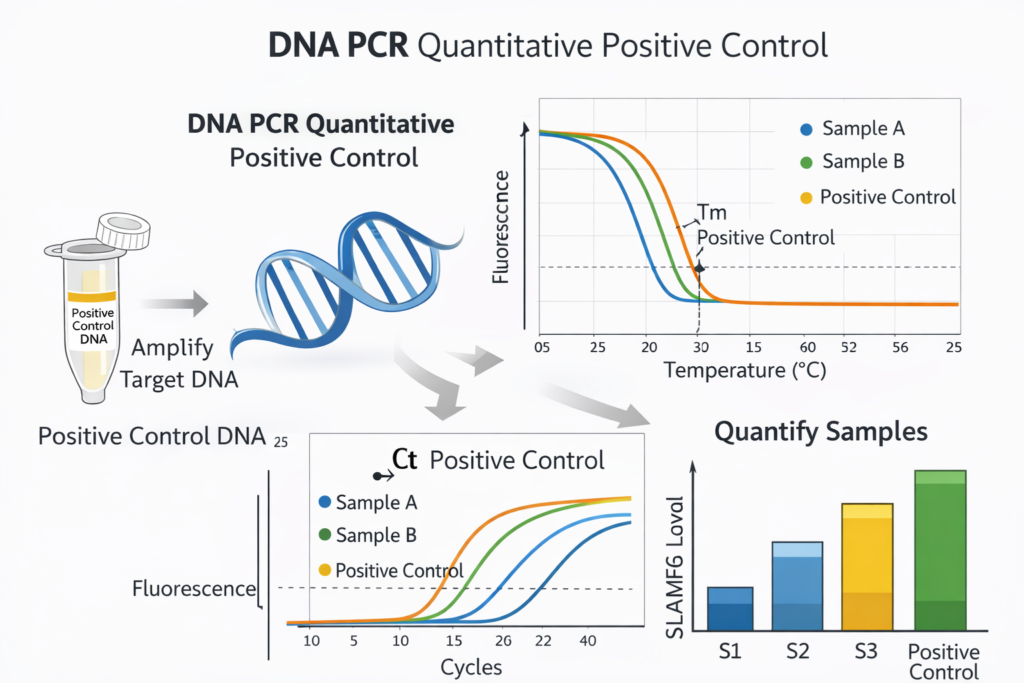
What is a DNA PCR Quantitative Positive Control?
A DNA PCR Quantitative Positive Control is a known DNA template with a specific and quantified concentration used in quantitative PCR (qPCR) experiments. This control DNA contains target sequences that are amplified in the PCR reaction, serving as a benchmark for assessing the efficiency and performance of the reaction.
The control is added to the PCR mix alongside the test DNA samples. Because its concentration is precisely known, it allows researchers to:
-
Validate the reaction: The positive control confirms that the PCR process is functioning correctly by amplifying a known target DNA sequence.
-
Assess amplification efficiency: The control helps determine if the PCR conditions are optimized for successful amplification by comparing the amplification of the control to the test sample.
-
Quantify DNA: By using a quantitative positive control with known DNA concentration, researchers can establish a standard curve to accurately quantify the target DNA in experimental samples.
This tool is crucial for producing reproducible and valid results in quantitative PCR, ensuring that experimental conditions are ideal and that the results are consistent across multiple assays.
Why is a Positive Control Important in PCR?
In any PCR experiment, the success of the amplification reaction is critical. A positive control provides several benefits:
-
Ensures PCR Validity: The primary function of a positive control is to confirm that the PCR reagents, including primers, enzymes, and buffers, are functioning correctly. If the positive control does not amplify, it is an indication that something is wrong with the PCR setup, and troubleshooting is required.
-
Verifies Reaction Conditions: A positive control helps ensure that the PCR conditions—such as temperature cycling and reagent concentrations—are optimal for amplification. If the control fails to amplify, adjustments can be made to optimize the reaction conditions.
-
Serves as a Benchmark for Quantification: In quantitative PCR, accurate DNA quantification is essential. The positive control with known concentration allows the creation of a standard curve, which serves as a reference to calculate the quantity of target DNA in experimental samples.
-
Reduces False Negative Results: By ensuring that the PCR process is functioning, the positive control helps reduce the risk of false-negative results, where a target DNA is present but fails to amplify due to issues in the experimental setup.
For more information on PCR quality control, see NIH PCR Guidelines.
Applications of DNA PCR Quantitative Positive Control
The DNA PCR Quantitative Positive Control is a versatile tool that has wide applications across various fields of research and diagnostics. Here are some of the most common applications:
1. Genetics Research
In genetics research, PCR is used extensively to amplify and study specific genes or regions of the genome. By using a quantitative positive control, researchers can ensure that the amplification conditions are optimal for the accurate detection and quantification of gene expression or sequence variation. This control is particularly useful in studies of gene mutations, genetic mapping, and genomic DNA sequencing.
For more on genetics research, see NCBI – Genetics.
2. Clinical Diagnostics
In clinical diagnostics, quantitative PCR is used for detecting and quantifying pathogens (such as viruses or bacteria) in patient samples, monitoring viral load, and detecting genetic mutations associated with diseases like cancer. The DNA PCR Quantitative Positive Control ensures the reliability of these diagnostic tests by providing a reference standard for quantification.
For more on clinical diagnostics, see CDC – PCR Diagnostic Tests.
3. Forensic Science
Forensic science relies on PCR to amplify and analyze DNA samples from crime scenes. The DNA PCR Quantitative Positive Control is used to validate the results and ensure that the PCR amplification of DNA from sometimes degraded samples is successful. It is especially critical in forensic cases where accurate DNA identification is required for matching samples to suspects or victims.
For forensic DNA analysis guidelines, see FBI – DNA Testing.
4. Environmental Monitoring
In environmental monitoring, PCR is used to detect and quantify environmental DNA (eDNA) from water, soil, or air samples. The DNA PCR Quantitative Positive Control ensures the accuracy of amplification in these complex environmental samples, allowing for accurate quantification of microorganisms, pollutants, or invasive species.
For environmental research insights, visit EPA – Environmental DNA.
5. Agricultural Research
In agriculture, PCR is frequently used to detect plant pathogens, genetically modified organisms (GMOs), or to verify the purity of seeds. The DNA PCR Quantitative Positive Control serves as a reliable tool to validate the amplification process, ensuring that PCR assays for pathogen detection or GMO verification are working as intended.
For more on agricultural research, visit USDA – Agricultural Research.
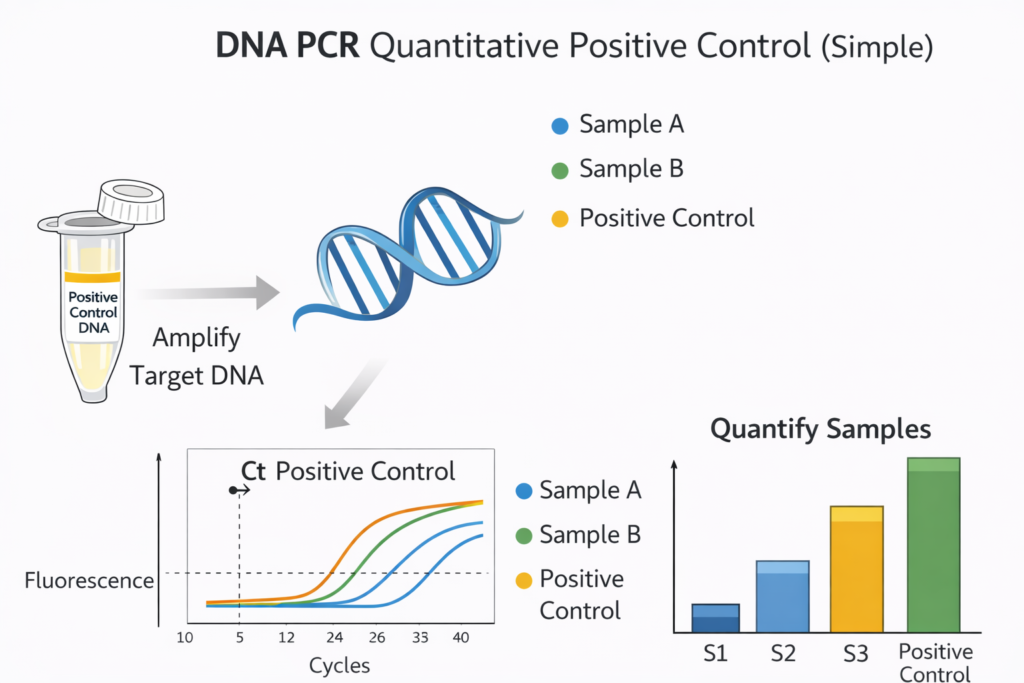
Advantages of Using DNA PCR Quantitative Positive Control
There are several key advantages to incorporating the DNA PCR Quantitative Positive Control into your PCR experiments:
-
Reliability: The positive control ensures that the PCR reaction is valid, reducing the likelihood of errors and enhancing the reliability of experimental results.
-
Standardization: By providing a consistent DNA template, the control standardizes the PCR reaction, ensuring uniform results across different experiments.
-
Quantification: The positive control allows for the accurate quantification of DNA, which is crucial in qPCR applications where precise measurement of target DNA is required.
-
Error Detection: The control helps in early detection of errors in PCR setup or amplification, saving time and resources by preventing the need for repeating experiments.
How to Use the DNA PCR Quantitative Positive Control
Using the DNA PCR Quantitative Positive Control is simple and follows standard PCR protocols. The positive control DNA is added to the reaction mixture along with the primers, polymerase, and other necessary reagents. The reaction is then run through the PCR thermocycling conditions as usual.
Once the PCR reaction is complete, the results can be analyzed using fluorescence-based detection (in the case of quantitative PCR) or gel electrophoresis to visualize the amplified products. The quantification of the target DNA in your test samples is then carried out by comparing the fluorescence or intensity to the standard curve created with the positive control.
Conclusion
The DNA PCR Quantitative Positive Control is an indispensable tool in ensuring the success and reliability of PCR experiments. Whether you are working in genetics research, clinical diagnostics, forensic science, environmental monitoring, or agricultural studies, this control is essential for producing accurate, reproducible results.
By ensuring the accuracy of amplification, the DNA PCR Quantitative Positive Control enhances the integrity of PCR-based experiments, facilitating progress in scientific discovery, diagnostic testing, and applied research.

Human Fibroblast Growth Factor Receptor 1 (FGFR1) ELISA: A Comprehensive Overview
HOXB7 Polyclonal Antibody: A Critical Tool in Developmental Biology and Cancer Research
Implementing a Decentralized Quality Control Strategy for Abbott ID NOW™ Influenza Testing in Point-of-Care (POC) Settings
About Author
