
Understanding the Importance of the 100bp DNA Ladder in Molecular Biology
In the field of molecular biology, DNA analysis is a central part of many experimental procedures, ranging from PCR and gel electrophoresis to cloning and DNA sequencing. One of the most important tools in these analyses is the 100bp DNA Ladder. This molecular marker plays a vital role in accurate DNA sizing, allowing researchers to estimate the size of unknown DNA fragments by providing a reliable reference. In this comprehensive guide, we will dive deep into what the 100bp DNA Ladder is, how it works, and its critical applications in laboratory research, along with best practices for using it effectively.
What is the 100bp DNA Ladder?
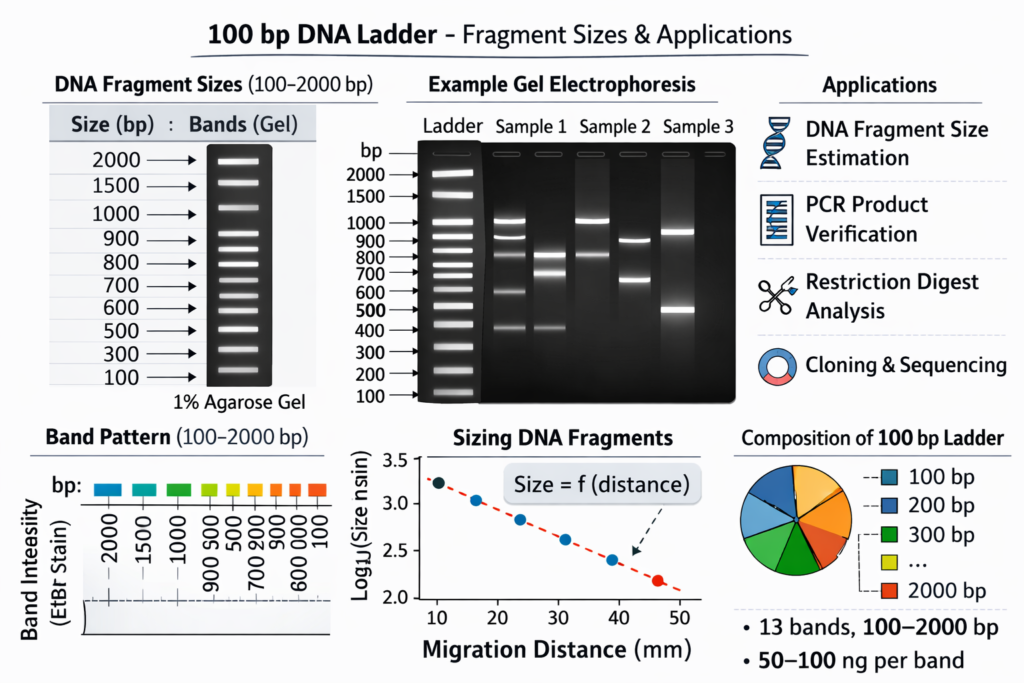
The 100bp DNA Ladder is a DNA molecular weight marker composed of DNA fragments of known sizes, typically ranging from 100 base pairs (bp) to 1000 bp. These DNA fragments are carefully calibrated to ensure their sizes are accurate, providing a useful reference to estimate the size of experimental DNA samples during gel electrophoresis.
In gel electrophoresis, DNA molecules are separated based on their size as an electric field pulls the negatively charged DNA towards the positive end of the gel. Smaller fragments move faster, while larger fragments travel more slowly. The 100bp DNA Ladder contains DNA fragments of known sizes that migrate through the gel and act as a guide to compare and estimate the size of the experimental DNA fragments.
This ladder is essential in various molecular biology techniques, particularly when precise DNA sizing is crucial. Its reliable, accurate size markers ensure researchers can confirm the identity of their samples with confidence.
For a detailed guide on how to prepare and utilize DNA ladders in molecular biology research, refer to trusted resources such as NIH’s protocol on agarose gel electrophoresis.
Why is the 100bp DNA Ladder Crucial in Molecular Biology?
DNA analysis often involves the measurement of DNA fragment lengths to identify and characterize various genetic components. Without a reliable reference for fragment size, these measurements would be inaccurate, which could lead to flawed experimental conclusions. The 100bp DNA Ladder provides the necessary reference to determine the size of DNA fragments accurately.
The 100bp DNA Ladder serves several functions in a laboratory setting. From verifying PCR products and confirming the integrity of samples to ensuring successful cloning procedures, it is a versatile tool for many molecular biology applications. Let’s take a closer look at how the 100bp DNA Ladder is used in various experiments and why it is indispensable.
Key Applications of the 100bp DNA Ladder
1. Gel Electrophoresis: A Fundamental Tool for DNA Fragment Sizing
Gel electrophoresis is one of the most commonly used techniques for separating and analyzing DNA fragments. The 100bp DNA Ladder is used as a reference marker during gel electrophoresis to estimate the size of unknown DNA fragments. The DNA ladder is run in parallel with your samples in the same gel, and by comparing the migration pattern of the samples with the ladder, you can accurately estimate the size of the DNA fragments.
For more on the process of gel electrophoresis and the role of molecular weight markers, you can refer to the University of California Berkeley’s guide on electrophoresis.
2. PCR Product Analysis: Ensuring the Correct Amplification
The 100bp DNA Ladder is invaluable for analyzing PCR (Polymerase Chain Reaction) products. PCR is a technique used to amplify specific DNA segments, and verifying the size of the PCR products is essential to ensure successful amplification. By running the 100bp DNA Ladder alongside your PCR product in a gel, you can confirm that the correct DNA fragment was amplified.
When working with PCR, it is critical to confirm that the amplified DNA corresponds to the expected size. The ladder ensures that the PCR product is of the expected length, which is essential in verifying that the amplification was successful. For detailed information on PCR troubleshooting and analysis, visit the NIH’s guidelines.
3. Cloning and Recombinant DNA Work: Verifying Insert Size
In molecular cloning, researchers frequently insert genes or fragments of interest into vectors. Verifying the size of the inserted DNA is crucial to ensure successful cloning. The 100bp DNA Ladder provides a simple and efficient way to determine the size of the inserted fragment in recombinant DNA experiments. By comparing the size of the DNA insert with the ladder, researchers can confirm that the cloning procedure worked as intended.
For more information on molecular cloning and the use of DNA markers, check out the Department of Energy’s recombinant DNA resource.
4. Quality Control: Ensuring the Integrity of DNA Samples
The 100bp DNA Ladder is also used in DNA quality control to verify the integrity of DNA samples. DNA degradation or contamination can lead to inaccurate results in experiments. The ladder provides a means to assess whether the DNA is intact by comparing its migration pattern against the ladder. If the sample shows signs of degradation (e.g., smearing in gel electrophoresis), it indicates that the DNA sample may not be suitable for downstream applications.
For further best practices on DNA quality control, you can consult the Centers for Disease Control and Prevention.
Why Should You Choose the 100bp DNA Ladder?
1. High Accuracy and Precision
The 100bp DNA Ladder is designed to provide precise and accurate size calibration. Its fragments are meticulously sized to offer a highly reliable reference for determining the size of your experimental DNA samples. This accuracy is essential when working on research that demands high precision, such as gene cloning, transcript analysis, and genetic sequencing.
The accuracy of DNA ladders is regularly verified against established standards. For more on the importance of size markers in DNA research, check out the National Institute of Standards and Technology.
2. Versatility Across Experiments
The 100bp DNA Ladder is suitable for a variety of applications, from analyzing small PCR products to larger DNA fragments in cloning or sequencing experiments. Whether you are working with large or small DNA samples, this ladder provides a versatile sizing solution for different types of electrophoresis gels.
For guidelines on choosing the right DNA marker for your experiments, refer to the University of Washington’s molecular biology resources.
3. Ease of Use: Ready-to-Use Format
One of the key advantages of the 100bp DNA Ladder is its convenience. The ladder comes pre-mixed and ready to use, saving you time and effort in preparing your experiments. This ready-to-use format ensures that your lab procedures can run smoothly and efficiently.
If you’re looking for a detailed explanation of the benefits of using pre-mixed molecular markers, see the University of Illinois at Urbana-Champaign’s molecular biology handbook.
4. Compatibility with Multiple Staining Methods
The 100bp DNA Ladder is compatible with various DNA staining methods, including ethidium bromide, SYBR™ Safe, and GelRed. This compatibility allows researchers to choose the most suitable staining method for their gel electrophoresis experiments, ensuring optimal visualization of DNA bands. It is essential that the DNA ladder works seamlessly with your chosen visualization method to ensure reliable results.
To explore different DNA staining techniques, consult the Harvard Medical School’s biotechnology department.
How to Use the 100bp DNA Ladder Effectively
-
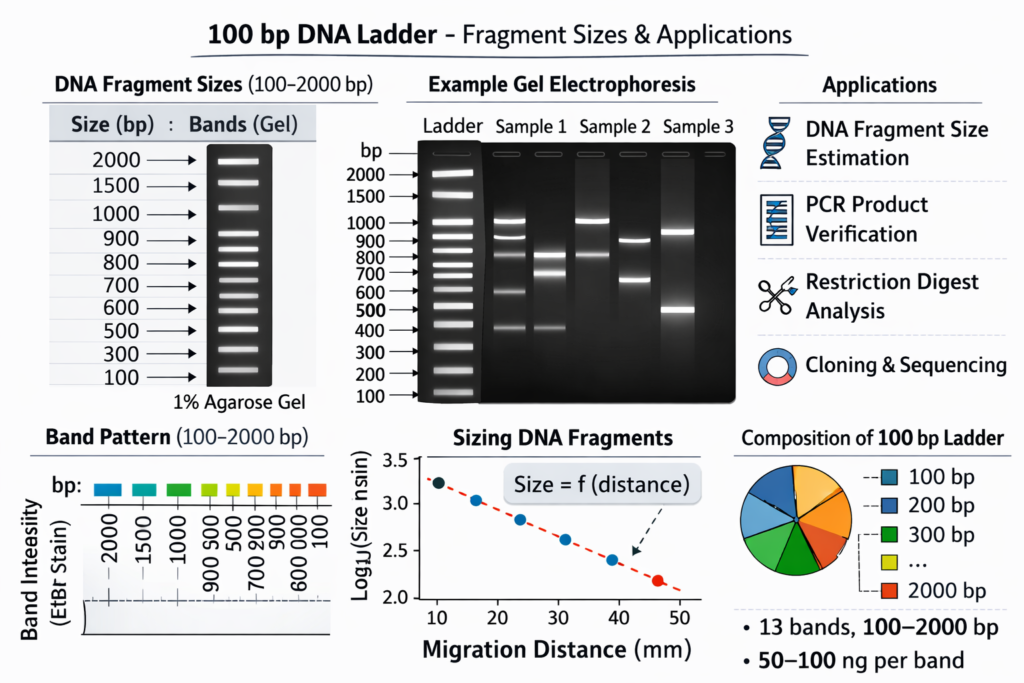
Prepare Your Agarose Gel: Start by preparing your agarose gel. For accurate fragment separation, it’s important to choose the correct agarose concentration, typically between 1-2%. For further guidance, visit the NIH’s molecular biology protocols.
-
Load the DNA Samples and Ladder: Once your gel is set, load both your DNA samples and the 100bp DNA Ladder into separate wells. Mix the ladder with a loading dye to track its migration during electrophoresis.
-
Run the Gel: Apply the electric field to the gel and separate the DNA based on size. Ensure that the voltage is appropriate for the gel type and fragment sizes. For more on electrophoresis parameters, see the NIH Electrophoresis Protocol.
-
Visualize the Results: After running the gel, use a suitable DNA stain and visualize the results under UV light. Compare the band patterns of your experimental DNA with the known bands in the 100bp DNA Ladder.
-
Estimate DNA Sizes: Based on the migration of the bands in the ladder, estimate the size of your experimental DNA. This size estimation is essential for confirming the identity and integrity of your DNA sample.
Conclusion: The Essential Role of the 100bp DNA Ladder in Molecular Research
The 100bp DNA Ladder is an indispensable tool in molecular biology, providing researchers with an accurate and reliable reference for DNA fragment sizing. Whether you’re performing PCR analysis, cloning, or quality control, the ladder serves as an essential guide to ensure your experimental results are accurate and reliable.

Tuberculosis and the Role of Rapid Tests in Global Health
Sheep Plasma K3EDTA (Unfl) — Research-Grade Matrix, Chelation Chemistry, and Pre-Analytical Controls
Goat Anti-HIF1α Polyclonal IgG Antibody: A Key Tool for Hypoxia Research
About Author
