
Understanding Human IRF8 ELISA: Measuring Immune Communication at the Molecular Level
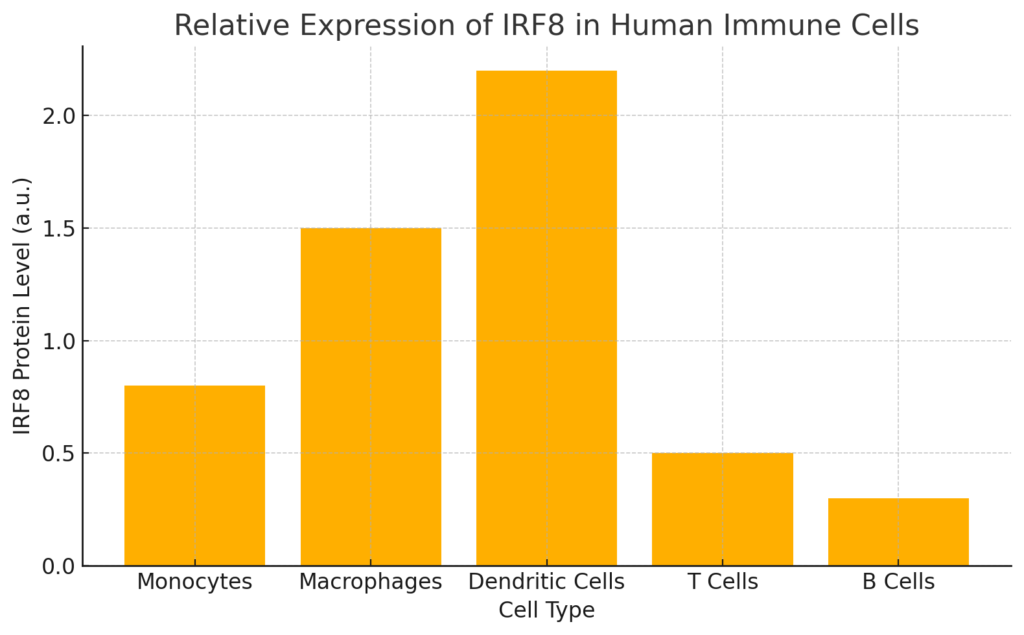
In the intricate world of cell signaling and immune function, Interferon Regulatory Factor 8 (IRF8) plays a powerful, though often behind-the-scenes, role. IRF8 is a transcription factor, meaning it controls how specific genes are turned on or off, particularly in immune cells like macrophages and dendritic cells. Measuring how much IRF8 is present in human samples—especially during inflammation or infection—is critical to understanding how the immune system reacts to threats. To do this, researchers often use a method called ELISA (Enzyme-Linked Immunosorbent Assay).
What Is IRF8?
IRF8 is part of a larger family of transcription factors that respond to interferons, molecules that help coordinate immune responses. It is especially active in myeloid cells, where it helps guide their development and function. Without proper IRF8 activity, immune regulation can go awry, leading to problems such as chronic inflammation or weak defense against infection.
You can find a comprehensive introduction to IRF8 on NCBI Gene and related transcription factor pathways at the National Human Genome Research Institute.
Research teams at institutions like University of California, San Francisco (UCSF) and Washington University in St. Louis study IRF8’s function in cell lineage decisions, especially in how immune cells mature and fight infection.
Why Measure IRF8?
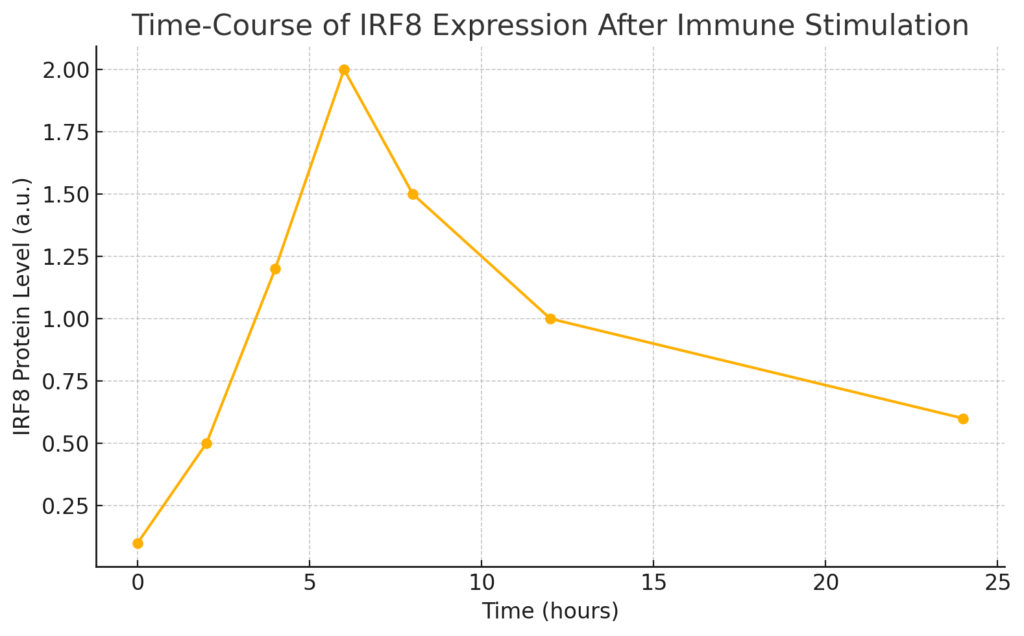
IRF8 levels rise and fall depending on immune signals, especially during infections or in autoimmune disorders. Measuring it gives scientists insight into the functional state of the immune system.
For example, the National Institutes of Health (NIH) has funded studies showing that IRF8 is essential in controlling interferon gamma pathways and macrophage polarization (NIH RePORTER).
At Yale University, researchers are exploring how IRF8 expression may be altered in neuroinflammation and multiple sclerosis, while University of Michigan scientists link IRF8 expression to dendritic cell performance in infection models.
How Does IRF8 ELISA Work?
The IRF8 ELISA is a laboratory test designed to detect and measure human IRF8 protein in biological samples, typically from blood, serum, or tissue lysates.
Steps in a Standard ELISA:
-
A capture antibody specific to IRF8 is fixed to a microplate.
-
The sample is added and IRF8 binds to the antibody.
-
A detection antibody is added, which also binds to IRF8.
-
This detection antibody is linked to an enzyme, and when a substrate is added, a color change occurs.
-
The color intensity reflects the amount of IRF8 present and is measured using a spectrophotometer.
Resources such as CDC’s ELISA guidance and technical manuals from Cornell University outline the basics and best practices.
Labs at Stanford University and University of North Carolina at Chapel Hill regularly use this method for precision protein analysis.
Applications of IRF8 ELISA
1. Immunodeficiency Studies
At National Institute of Allergy and Infectious Diseases (NIAID), IRF8 ELISA helps track molecular mechanisms in patients with primary immunodeficiencies.
2. Cancer Research
IRF8 is known to suppress tumors by controlling cell growth in immune systems. Research from University of Chicago and MD Anderson Cancer Center links IRF8 levels with tumor-infiltrating myeloid cells.
3. Infectious Disease
IRF8 plays a major role in immune defense against mycobacteria and viruses. Johns Hopkins University researchers have shown how changes in IRF8 expression affect susceptibility to infections.
4. Autoimmune Disorders
IRF8 dysregulation has been linked to autoimmune pathologies such as lupus. The National Institute of Arthritis and Musculoskeletal and Skin Diseases (NIAMS) supports studies on how IRF8 levels impact immune cell overactivation.
5. Vaccine Research
Understanding how immune cells react to vaccines involves tracking proteins like IRF8. At University of Washington, teams study IRF8 as a marker for vaccine-induced dendritic cell activation.
![AffiELISA® Human Interferon regulatory factor 8 ELISA [ IRF8]](https://affigen.com/cdn/shop/files/5BAFG-E4345_5D_20AffiELISA_C2_AE_20Cattle_20IFNg_20Kit_20High-Resolution_20Interferon_20Gamma_20ELISA_20Detection_c484f0e9-6161-4ee9-8358-9162b01e3ab5_535x.png?v=1712847749)
Advantages of Using ELISA for IRF8
Compared to other molecular tools like Western blotting or qPCR, ELISA offers:
-
Quantitative results — not just presence/absence
-
High sensitivity — detects small changes in expression
-
Multiplex potential — multiple targets can be tested in parallel
-
Scalability — suitable for large sample sizes
Harvard Catalyst’s Lab Support Services provide access to ELISA platforms, and University of Florida Biotechnology Core offers validated assays for IRF8 and other transcription factors.
Technical Considerations
When designing an IRF8 ELISA experiment, researchers must:
-
Choose validated antibodies, such as those cataloged by NCI’s Antibody Portal
-
Use appropriate controls for baseline IRF8 levels
-
Confirm the specificity of the antibodies, since IRF8 shares some structure with other IRF family proteins
Core facilities at University of Arizona and Michigan State University offer support for optimizing ELISA protocols.
Real-World Research Examples
-
Neuroimmunology: Oregon Health & Science University uses IRF8 ELISA in studying microglial development in the brain.
-
Monocyte Biology: Emory University explores how IRF8 affects human monocyte response in systemic infections.
-
Tissue Engineering: University of Pennsylvania incorporates IRF8 ELISA in tissue immune compatibility studies.
Educational and Public Access Resources
For learners or non-specialists interested in molecular biology techniques:
And for protocol walkthroughs and lab safety:
Conclusion
While the science behind Human IRF8 ELISA may seem complex, the purpose it serves is deeply human: to understand how the immune system thinks, acts, and reacts. By tracking a single protein like IRF8, scientists can uncover entire networks of communication happening inside cells—insight that helps guide research into inflammation, infection, and even immune tolerance.
With the support of institutions like NIH, CDC, and university labs across the U.S., IRF8 ELISA is helping decode how the immune system maintains balance in an ever-changing world.

Smad2 Antibody: Key Functions, Applications, and Research
AffiNGS® Ribo-off rRNA Depletion Kit (Human/Mouse/Rat): Enhancing Transcriptome Analysis
Comparative Performance of the Canivet Asian4 VetDx Test in Multi-Species Veterinary Diagnostics
About Author
