
LNP Kit for Fast Immunocyte In Vitro Delivery: A Breakthrough in Non-Viral Gene Delivery
Overview
The LNP Kit for Fast Immunocyte In Vitro Delivery is a next-generation transfection platform designed for efficient, rapid, and non-toxic delivery of genetic material into hard-to-transfect immune cells. Using cutting-edge lipid nanoparticle (LNP) technology, this kit supports a range of gene editing and mRNA expression workflows in T cells, B cells, dendritic cells (DCs), and natural killer (NK) cells. Its applications span from cancer immunotherapy to infectious disease modeling, vaccine development, and autoimmune disease research.
Explore the science behind LNPs in NIH’s Nanomedicine Roadmap and read about their potential in immunotherapies at NCI’s Nanotechnology page.
What Are Lipid Nanoparticles?
Lipid nanoparticles (LNPs) are nanoscale delivery vehicles composed of ionizable lipids, helper lipids, cholesterol, and PEG-lipids. They encapsulate nucleic acids like mRNA, siRNA, and CRISPR/Cas9 plasmids, protecting them from enzymatic degradation while enabling cell membrane fusion and endosomal escape.
LNPs are the delivery method behind the mRNA COVID-19 vaccines approved by the FDA and have been studied in therapeutic models by institutions like Harvard and Stanford.
Why Immune Cells?
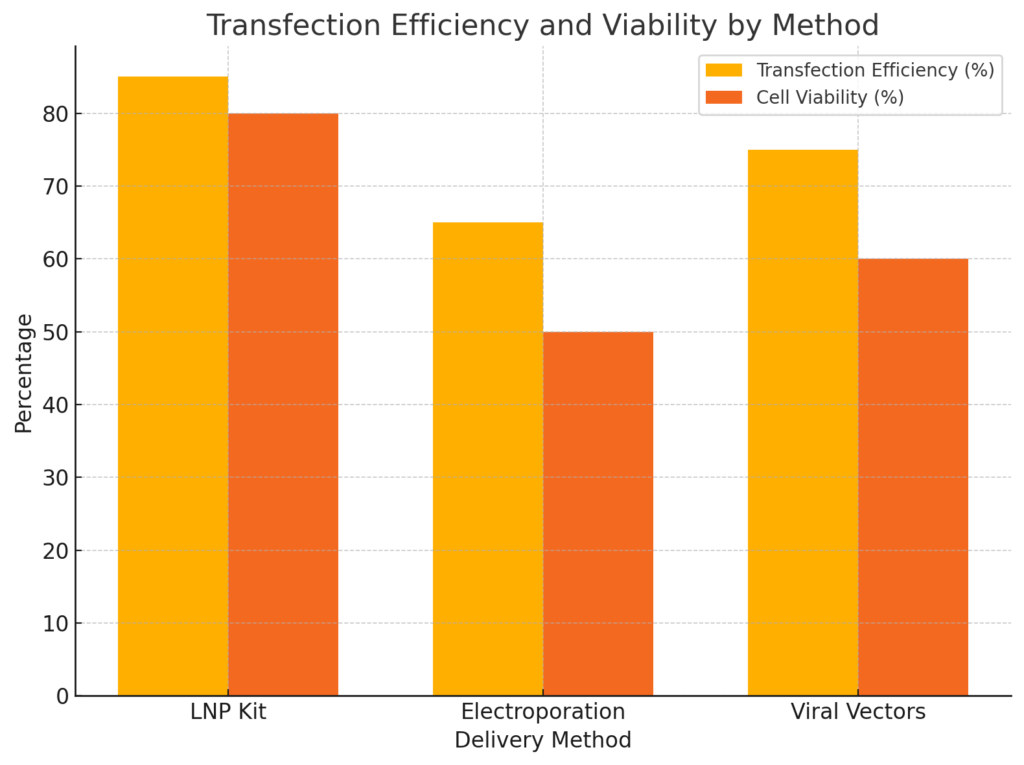
Immunocytes, including primary human T cells, monocyte-derived dendritic cells, and macrophages, are critical targets for next-gen therapies. These cells are notoriously resistant to traditional transfection methods like electroporation or lipofection, which often result in poor viability and inconsistent delivery.
The LNP Kit overcomes these hurdles, enabling researchers to:
-
Transiently express mRNA-encoded CARs in T cells for early-stage CAR-T therapy development
-
Deliver Cas9-RNP complexes for gene knockout in monocytes or macrophages
-
Activate antigen-presenting cells (APCs) with synthetic mRNA for vaccine testing
The National Cancer Institute and NIAID have emphasized these applications in funded programs.
Technical Highlights
1. High Efficiency, Low Toxicity
-
85% mRNA delivery efficiency in CD8+ T cells
-
75% viability post-transfection
-
Compatible with serum-containing media
2. Fast Workflow
-
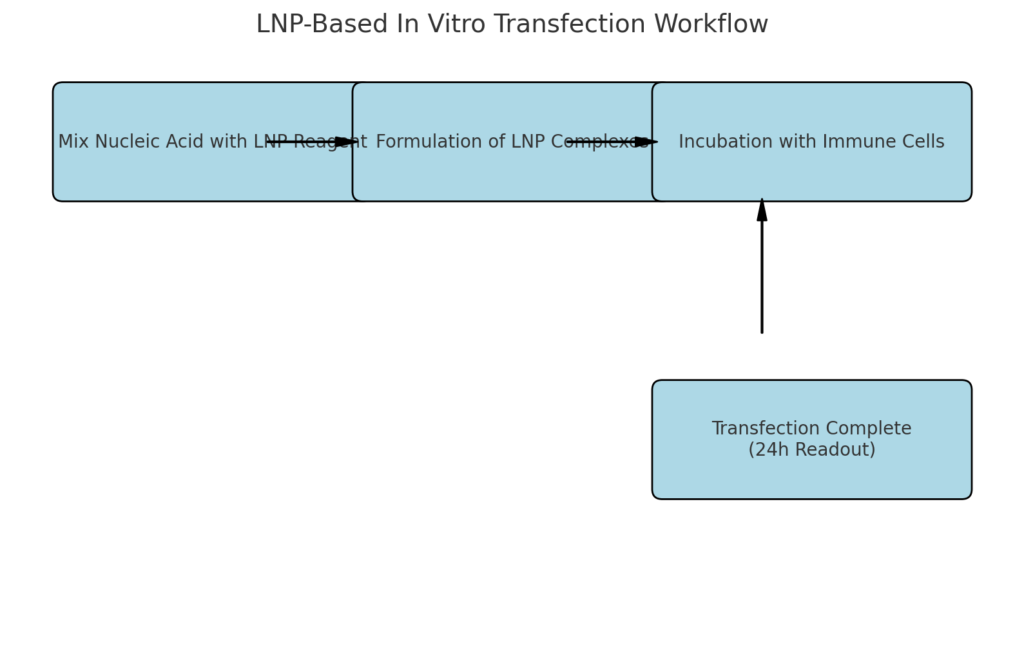
Mix-and-go: <10 min prep time
-
Nanoparticles form spontaneously at room temp
-
Ready for downstream analysis within 24 hours
3. Compatible Payloads
-
mRNA, siRNA, sgRNA, plasmid DNA, and Cas9-RNP
-
Designed for in vitro experiments with primary human or mouse cells
Explore experimental design examples on NCBI and review protocols through PubMed Central.
Key Applications
A. Cancer Immunotherapy Prototyping
LNP delivery supports fast, transient CAR expression in immune cells without using viral vectors. This makes it ideal for preclinical optimization before advancing to stable engineering.
Studies at MD Anderson Cancer Center and Fred Hutchinson Cancer Center highlight the power of this strategy.
B. Infectious Disease Research
Rapid delivery of mRNA vaccines or immune modulators into dendritic cells supports ex vivo testing of antigens and adjuvants for HIV, tuberculosis, or COVID-19.
Supported by CDC and global surveillance models promoted by NIH’s Fogarty International Center.
C. Autoimmune Disease Modeling
Delivery of transcription factors or CRISPR components can reprogram T regulatory cells (Tregs) to study pathways involved in lupus, MS, and IBD.
The NIAMS provides funding for autoimmune research using gene-editing models.
Comparison to Other Methods
| Feature | LNP Kit | Electroporation | Viral Vectors |
|---|---|---|---|
| Viability | High (>75%) | Moderate to low | Moderate |
| Safety | Non-viral, low inflammatory | Potentially inflammatory | Risk of insertional mutagenesis |
| Preparation Time | ~10 min | >1 hour | Days to weeks |
| Scalability | High | Low | Moderate |
| Regulatory Compatibility | Yes (per FDA guidelines) | Yes | Complex |
LNPs are broadly regarded as safer and easier to deploy, especially in settings governed by NIH biosafety regulations.
Kit Components
-
LNP Core Formulation (proprietary ionizable lipid blend)
-
Encapsulation Buffer (pH-controlled for stability)
-
Dilution Medium (ready for cell culture)
-
Step-by-Step Protocol (including troubleshooting tips and controls)
Access similar protocols through Johns Hopkins Molecular Biology Portal or video tutorials from NIH OITE.
Regulatory and Clinical-Grade Pathways
The LNP platform used in this kit is aligned with current Good Manufacturing Practices (cGMP) and supports translation from bench to bedside.
-
Approved under IND-enabling studies by the FDA
-
LNPs shown to be safe and scalable for human trials in ClinicalTrials.gov
Supporting Infrastructure and Tools
-
Data integration: Use in combination with BioData Catalyst and GenBank for storage and comparison.
-
Analysis tools: Compatible with FlowJo EDU, NIH ImageJ, and GEO.
Ethical Considerations
The non-viral nature of the LNP Kit significantly reduces biohazard risks and adheres to ethical standards set by HHS, the Belmont Report, and institutional IRBs.
Final Thoughts
As immune-based therapies and mRNA platforms continue to gain momentum, the LNP Kit for Fast Immunocyte In Vitro Delivery offers a flexible and high-efficiency tool for researchers. Whether for T-cell engineering, immune profiling, or vaccine prototyping, this kit is built to meet the demands of modern immunology and genetic medicine.
For additional support or ordering information, consult:

Protein Jagged-1 ELISA: A Detailed Exploration of Its Role in Research and Diagnostics
Tuberculosis and the Role of Rapid Tests in Global Health
The Importance of PCR Qualitative Positive Controls in Diagnostic Assays: Ensuring Reliable Results
About Author
